
 Don't miss this exciting offer — contact us today and make it yours!
Marketing
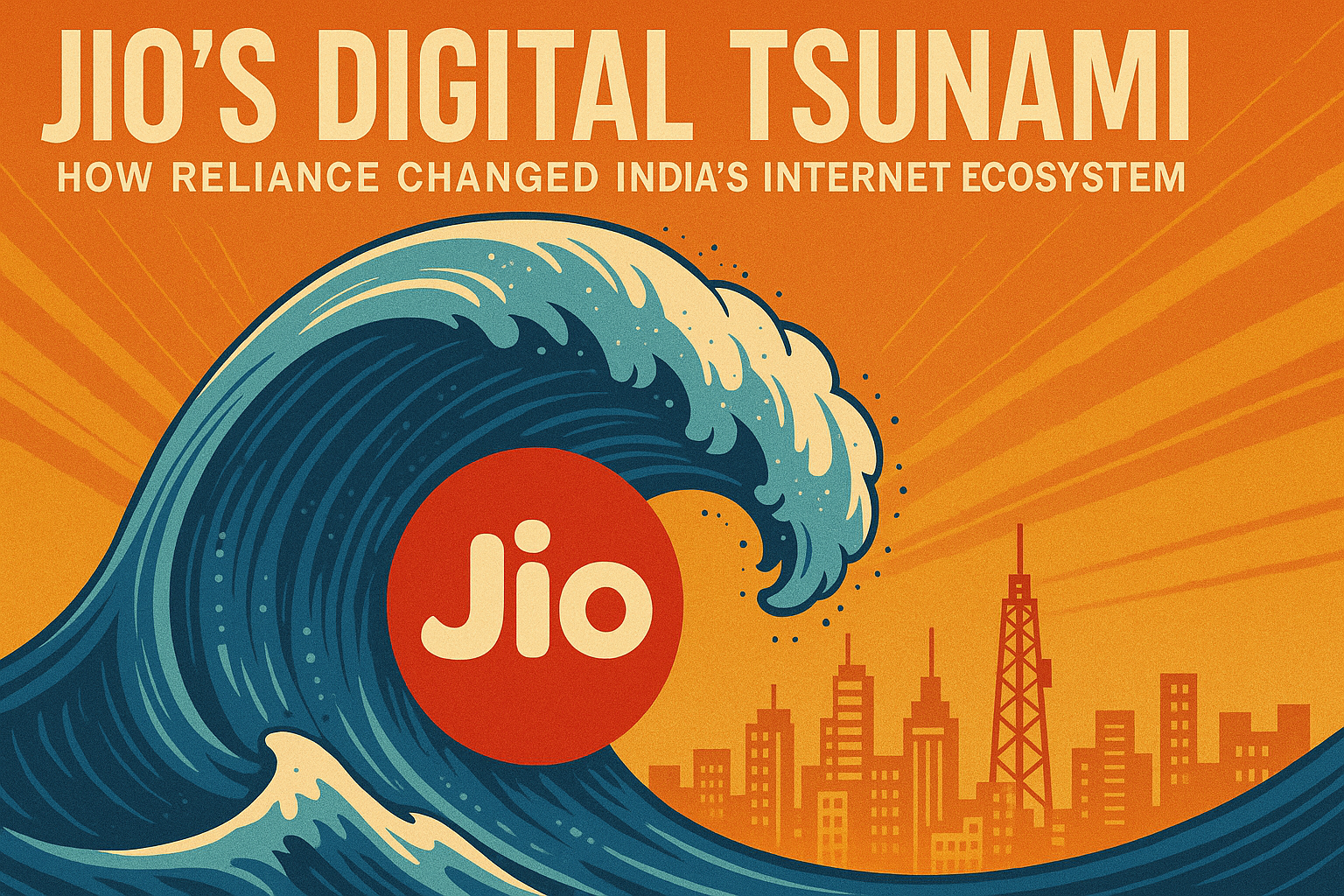
In September 2016, Reliance Industries Limited launched Jio, triggering what many now call a digital tsunami across India. Within just a few months, Jio disrupted the telecom industry, democratized internet access, and reshaped how Indians consume data. This case study explores how Jio redefined the digital landscape, created a hyper-connected society, and forced an industry-wide transformation.
India’s mobile internet was expensive and slow.
Average cost of 1GB data: ₹250+
Internet penetration (2016): ~27%
Limited rural internet access
Telecom dominated by Airtel, Vodafone, Idea
Mukesh Ambani aimed to build “a digital revolution for every Indian”. Jio was part of Reliance’s broader strategy to pivot into digital services, content, and platforms.
| Component | Description |
|---|---|
| Free Data & Calls | Jio offered free voice calls and 4G data for the first 6 months. |
| Pan-India 4G Network | Jio was the first all-IP network with nationwide 4G-only services. |
| Affordable Plans | Data plans dropped to ₹4–₹10/GB |
| Jio Apps Ecosystem | Free access to JioTV, JioCinema, JioSaavn, JioChat, etc. |
| JioPhone | ₹1500 4G-enabled feature phone for non-smartphone users |
India became the largest mobile data consumer in the world.
From 200 MB/month (2016) to 14+ GB/month (2024 per user)
Data became cheaper than a cup of tea.
Over 10 telecom operators exited or merged (e.g., Vodafone-Idea)
Massive tariff wars, leading to:
Free calling as a norm
Competitive pricing across all players
Airtel and others were forced to upgrade infrastructure rapidly.
Rural internet penetration grew rapidly.
JioPhone helped bring over 100 million feature phone users online.
Tier 2 & 3 cities started witnessing a digital content boom.
Rise of OTT platforms (Hotstar, Netflix India, Amazon Prime)
Surge in edtech (Byju’s), fintech (PhonePe, Google Pay), and ecommerce (Meesho, Flipkart)
JioMart and Jio Platforms attracted investments from Facebook, Google, and others
Boosted Digital India and Startup India initiatives
Strengthened e-Governance, UPI, telemedicine, and digital education
| Metric | 2016 (Pre-Jio) | 2024 (Post-Jio Era) |
|---|---|---|
| Internet Users | 350 million | 900+ million |
| Avg Data Cost (per GB) | ₹250 | ₹10–₹15 |
| Monthly Data Use/User | 500 MB | 14–16 GB |
| Telecom Operators | 12+ | 3 major players |
| Smartphone Users | 280 million | 720+ million |
Predatory Pricing: Critics accused Jio of undercutting rivals with unsustainable prices.
Monopolistic Concerns: Market consolidation raised fears of Reliance dominance.
Data Privacy: Questions emerged over Reliance’s data handling & surveillance.
Disruption Starts with Value: Offering something radically better (speed, price) can change user behavior overnight.
Strategic Loss-Leading Works: Jio’s free launch wasn’t a loss — it built a massive user base.
Ecosystem Thinking: Jio wasn’t just a telecom; it became a platform company (JioTV, JioMart, JioMeet, JioCinema).
Rural Markets are Goldmines: Tapping underserved audiences created a digital revolution.
Jio’s entry wasn’t just a telecom event—it was a national economic and cultural transformation. It connected the unconnected, created digital demand, forced industry-wide reform, and positioned India as a global data leader. Reliance Jio is a textbook example of how bold strategy, smart pricing, and infrastructure investment can rewrite an entire ecosystem.